This study investigates the evolutionary history of the J2a-FGC4992 (aka FGC4975) Y-chromosome lineage, a genetic variant found almost exclusively among Jewish men whose paternal ancestry includes a cohanic tradition, i.e., a tradition of descent from the ancient Israelite priesthood known collectively in Hebrew as cohanim. Using a robust dataset of samples whose STR results were predictive of J-FGC4992+, the authors employed Next Generation Sequencing (NGS) on 175 FGC4992+ samples to validate representative lineages and construct a detailed phylogenetic tree comprising dozens of sub-branches.
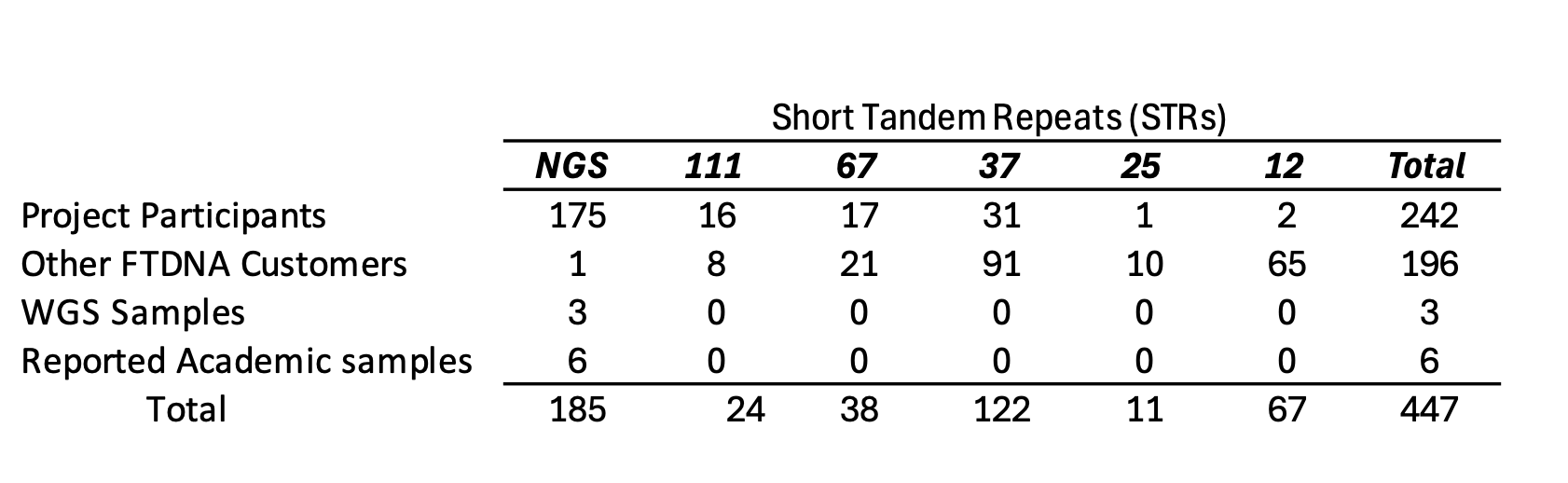 Figure 1. Source of samples included in the J2-FGC4992 study.
The J-FGC4992 lineage likely emerged during the Bronze Age in an as-yet unidentified region within the greater Mesopotamian/Levantine region. A pivotal expansion occurred in the Iron Age, resulting in a single prolific branch whose descendants persist today across diverse Jewish communities–and most of whom are aware of a cohanic heritage. Remarkably, it appears from genetic testing so far that any other branches of this lineage from the past 4,000 years either vanished or failed to propagate, underscoring the unique survival and spread of this particular genetic thread.
Introduction
Following the landmark 1996 Skorecki-Hammer study of Short Tandem Repeat (STR) markers among men with traditions of descent from Israelite priests, a wave of Jewish men—particularly those identifying as cohanim—turned to commercial Y-chromosome testing through Family Tree DNA. Their goal: to determine whether they carried the Cohen Modal Haplotype (CMH) found within the Y-DNA haplogroup branch J1 that had been identified by the study. Many were surprised and disappointed to learn they did not match the CMH profile.
In 2009, an updated study by Hammer and Behar, et al. revealed a more nuanced picture. While the J1 CMH remained the most prevalent among Jewish priestly lineages, researchers identified additional priestly haplogroups—most notably within the J2a branch.
The landscape shifted again in 2016 with the commercial availability of Next Generation Sequencing (NGS) from Family Tree DNA. Genetic genealogist Debra Katz launched an NGS-based investigation through her J2a Levant Project, focusing on individuals whose STR profiles aligned with the J2a priestly lineage described by Skorecki. At the same time, the Avotaynu Foundation initiated a global outreach effort to test Jewish men from Sephardic and Mizrahi communities. Among the 12,000+ Avotaynu study participants, the FGC4992 mutation surfaced in men from Jewish communities in Cochin (India), the Caucasus, and Turkey—highlighting the widespread and ancient reach of this lineage.
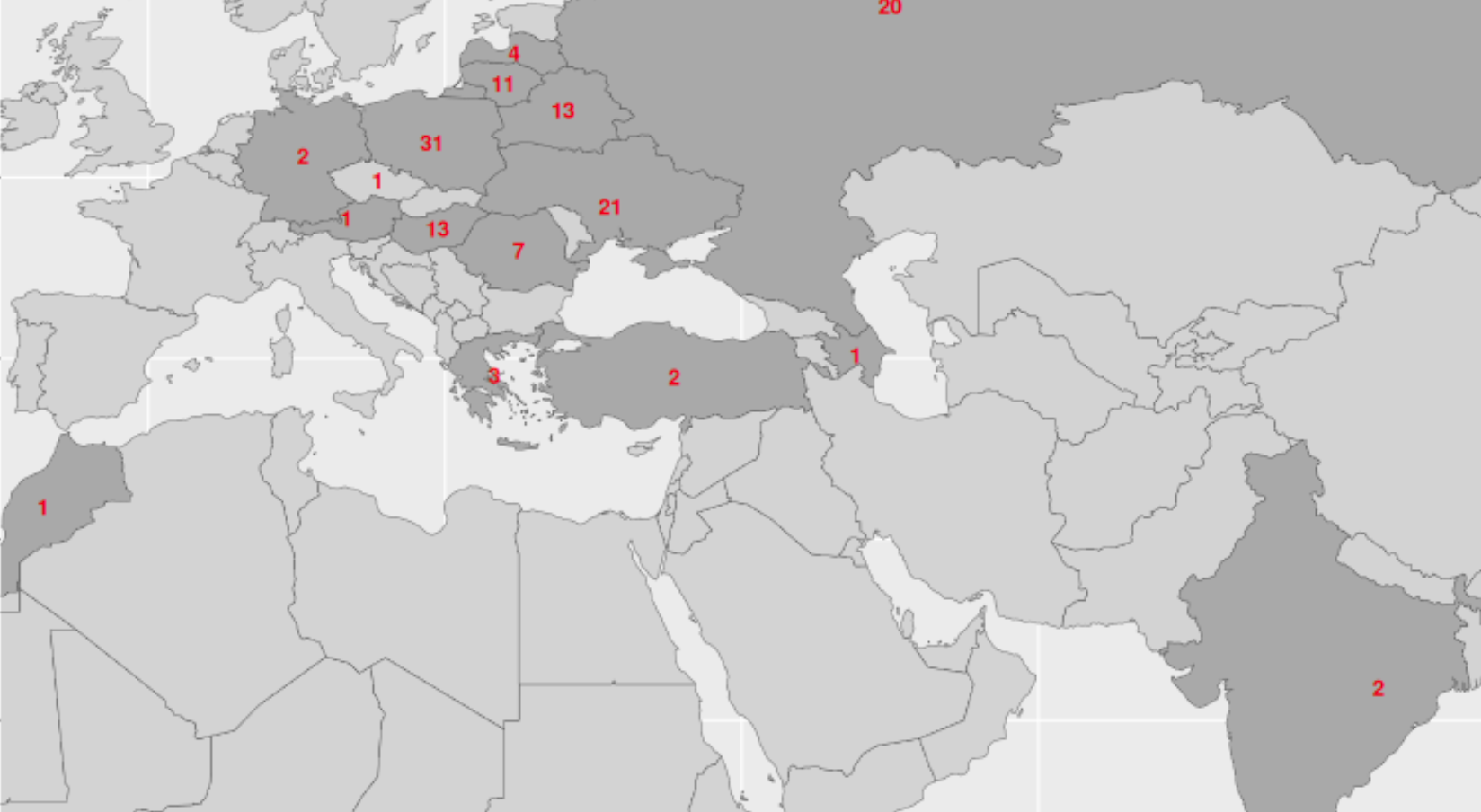
Figure 3. Known origins of study participants (Source: www.JewishDNA.net)
Migration History of the J-FGC4992 Lineage: Insights from Genetic Genealogy
Genetic and genealogical data from participants in the J2a Levant Project and the Avotaynu Project—combined with Next Generation Sequencing (NGS)—has enabled researchers to construct plausible migration narratives for the J-FGC4992 lineage over the past 2,500 years.
FGC4992 Origin and Emergence of Jewish Lineage
The J-FGC4992 mutation most likely arose during the Neolithic Era, circa 5,800 BCE, which is about 7,800 ypb [years before present]. The 95% Confidence Interval [CI] is 8,700–6,900 ybp. Despite its ancient origin, no surviving sub-branches have been identified that coalesce prior to the Iron Age, around 2,600 ybp (95% CI: 3,200–2,000 ybp). During the Iron Age, two distinct sub-branches emerged: J-FT384026 (identified hereafter as Haplogroup “A”) and J-FGC4942 (Haplogroup “B”), both of which are now found exclusively among men with Jewish paternal ancestry. The emergence of these two sub-branches suggests a geographic and cultural split within the Jewish world.

Figure 2: Phylogenetic Tree Chart of J-FGC4992 haplogroup and its subclades.
Branch A: Divergence in Persia and Asian Dispersal: ~2,600 ybp
Haplogroup A has an estimated mean formation date of circa 550 BCE (95% CI: 990–160 BCE), but as will be discussed later, historical events suggest the likely formation date may have been earlier. Haplogroup A then divided into two separate lineages around 200 BCE. One of these lineages was found among Caucasus Mountain Jews, and the other among Malabar Jews from Cochin, India. Notably, the Malabar testers had no known tradition of priestly descent, while among the Caucasus testers, one reported having such a tradition.
Branch B: Divergence within the Levant or Babylonian Region: ~2,600 ybp
Haplogroup B first formed around 600 BCE, similar to Haplogroup A, but in contrast, Haplogroup B split into its sub-branches much later, starting around 50 CE. (It is noteworthy that this branching date is right around the time of the Jewish revolts against Rome and the expulsion of Jews from much of Roman Judea.) Haplogroup B’s sub-branches are now found among men with Romaniote and Sephardic identities tracing back to Jewish communities in Morocco, Greece, Turkey, and Italy. These lineages later spread more broadly among Ashkenazi Jews, with ancestral ties to the Rhineland, the Russian Pale of Settlement, and the Austro-Hungarian Empire.
Sub-branch B1: (L254) ~1,950 ybp
The L254 (B1) sub-branch of Haplogroup B most likely formed around 50 to 100 CE but the most recent common ancestor of all testers on the B1 branch lived later, around 600 CE. (95% CI: 300 BCE–360 CE) The B1 branch is characterized by the fact that the testers on every one of its downstream branches claim a strong oral cohanic tradition. The few exceptions are individuals who, unlike the others on their terminal branch, have unknown paternity or whose ancestors converted to Christianity in earlier generations.
Sub-branch B1A: (FT394449) Moroccan Cohens This branch includes two testers, one of whom has a documented paternal lineage tracing to early 18th-century Meknes, Morocco, with a Sephardic rabbinic cohanic tradition. There is genealogy evidence which suggests, although it is not definitive, that this lineage may have been present in Morocco as early as the 11th century.
Sub-branch B1B: (FT69390) Ashkenazi Cohanim Formed around 600 CE (95% CI: 300–820 CE), this branch includes over 140 tested individuals. Nearly all trace their paternal ancestry to 18th-century Ashkenazi Jewish communities within the former Russian Pale of Settlement. A minority have genealogies indicating earlier migration from the Rhineland, Bohemia, or Crimea.
Sub-branch B2: (FGC30508) ~1,950 ybp
The B2 sub-branch formed very close to the 50-100 CE timeframe of the B1 branch formation, but presents a more complex subsequent genetic history, starting with its split into two separate downstream branches around 750 CE (95% CI: 450–1000 CE).
Sub-branch B2A: (BY68183) Greek Cohanic Lineage: One early sub-branch includes testers with cohanic ancestry linked to Jewish communities in Greece and later Istanbul. This branch further divided, eventually forming BY68183, which includes five unrelated testers—all surnamed Hassid—traced to a prominent rabbinic lineage in Salonika (Thessaloniki) which traces back to at least 1550 CE. Their ancestry likely extends to an individual who arrived in the region around 1480 CE from Spain or Italy.
Sub-branch B2B: (Z38408) Most Cohanim, Some Not: This sub-branch, which like B2A formed around 750 BCE, further split into four sub-lineages around 1200 CE (95% CI: 1030–1360 CE):
B2B1, B2B2, B2B3 European Cohanim: These three sub-branches are populated by Jewish men with a strong paternal line cohanic tradition—with the same type of rare exceptions noted under the L254 discussion. By the 17th and 18th centuries, the ancestors on these branches appear to have migrated from either the Rhineland or southeastern Europe into the northern and central regions of the Lithuanian-Polish Commonwealth and the Austro-Hungarian Empire.
B2B4 Italian Non-Cohanim: The fourth sub-branch, FT415655, includes four testers from a Mitrani rabbinical lineage. Though all have known Jewish paternal heritage, none were aware of a paternal line cohanic tradition. Their shared lineage traces back to rabbis in 15th-century Castile (Spain) and 13th-century Trani (Italy) and those early genealogical records show no indication that those rabbis were aware of priestly ancestry.
Genealogical and Genetic Implications
A comprehensive genealogical analysis was conducted for all participants in the J-FGC4992 study. With the exception of a few cases—which, as noted previously, involved adoption, misattributed paternity, or conversion occurring within recent centuries—all men who tested positive for J-FGC4992 possess documented Jewish paternal ancestry.
Verification of Priestly Traditions
Nearly all individuals within the FGC4942 sub-branch reported an oral tradition of cohanic (priestly) descent. These claims were substantiated through multiple sources:
- Personal or familial testimony
- Surnames historically associated with cohanim as they reference that ancestral status (e.g., Katz, Cohen, Kaplan, Sagenkahn)
- Gravestone inscriptions featuring symbolic or textual references to priestly status
- Archival records explicitly noting the cohanic designation
In rare cases where no cohanic tradition was known to the tester, genealogical research revealed plausible explanations:
- Russian military conscription, which often led to cultural dissociation
- Conversion to another religion, either for social privilege or due to interfaith marriage
- Secularization, particularly among Bundists, Zionists, or atheists, who may have consciously abandoned religious identifiers
- Adoptions where the biological father or grandfather was shown to have been aware of their cohanic tradition
Implications of the Caucasus and Cochin Jewish Sub-Branches
The presence of the same FT384026 sub-branch of J-FGC4992 in both the Caucasus Mountains and Cochin, India suggests a shared ancestral origin for these two groups. Both known history of the region and the familial lore of these lineages points to their migration from Judea or northern Mesopotamia during the first millennium BCE. Given that the estimated formation of their shared haplogroup branch is between the 6th and 9th centuries BCE, a very plausible hypothesis is that their common ancestor was among the Israelites displaced during the Assyrian conquest of the Northern Kingdom in the 8th century BCE.
There was a further branching between the two Caucasus Jewish testers that happened around 850 CE and it is particularly noteworthy because one lineage retained knowledge of a cohanic tradition, while the other did not. This situation suggests that their original FT384026 ancestor may have held priestly status, with that cultural memory preserved in some branches and lost in others.
Implications from Prominent FGC4942 > L254 Lineages
Multiple testers within the FGC4942 European sub-branch of FGC4942 descend from historically significant families. Described briefly below are some examples of these rabbinic or otherwise prominent lineages from the L254 downstream branch of FGC4942. These lineage histories offer valuable insight into the migration paths and cultural continuity of the ancestors of most men on the various subclades within FGC4942.
L254 > FT69390 > FGC4977 — Brodsky Lineage
This lineage traces to Rabbi Chaim Israel of Bruna, born circa 1375 CE in Brunn, Moravia (now Brno, Czech Republic). The Brodsky family, prominent 19th century Russian sugar magnates, descends from Rabbi Chaim and through the generations is linked via marriages to the Shor, Katzenellenbogen, Wahl, Heschel, and Kalonymus rabbinic dynasties—many of which trace back to 12th-century Frankia and the Rhineland. This ancestry is therefore relevant to many FGC4977 testers whose genetic matching with Brodsky indicates they coalesce with his line prior to the 14th century CE.
L254 > FT69390 > FGC4977 — Hungarian Katz Lineage
This lineage traces first to Jakob Akiva Kohen Katz, born 1805 CE in Uzhgorod, Hungary. Though his father’s name remains unknown, the family maintains records of six prior generations, reaching Rabbi Zev Wulf HaCohen Katz, born ca 1660 CE in Poland. Two possible ancestral paths extend back from Rabbi Zev: one traces to 15th-century Krakow, the other to 14th-century Mallorca, Spain. The unresolvable uncertainties illustrate the genealogical challenges of documenting even well-known rabbinic lineages farther back than the 17th century.
L254 > FT69390 > FGC30681 > BY189731 — Goldenthal/Kahana Lineage
This lineage first traces to Yakov Kahana, born circa 1535 CE in Brody, Galicia. Yakov was a widely-known Karaite leader in Europe. Family lore extends the lineage to another Yakov Kahana (born circa 1140 CE) and from that Yakov Kahana back to earlier Karaite ancestors living in Crimea. The lineage has an oral tradition that, prior to coming to Crimea, they descend from a Babylonian rabbinic line which included the Gaon of the Sura Academy in Babylonia (circa 853 CE) and an ancestor who was the first to use the title Kahana (circa 350 CE). This lineage therefore is relevant to FGC30681 testers whose genetic matching with Goldenthal indicates they coalesce with his line prior to the 16th century CE.
L254 > FT69390 > FGC30681 > FT239581 — Katznelson Lineage
This Ashkenazi cluster includes a large subset of testers with variants of the Katznelson surname (e.g., Nelson, Katsnelson, Katzenel’son and Katzenelenson). Despite their lore of the original surname being Katzenellenbogen, it appears more likely these men descend from an ancestor who married into the famous Katzenellenbogen family. Like the dozens of other testers with different surnames who are on this same FT239581 branch, the Katznelsons trace to the Minsk region of modern Belarus. The common ancestor for the entire branch likely lived around 1530 CE (95% CI: 1400–1630 CE). Family lore in some lineages recounts service to the Radziwill noble family of Lithuania during the 16th century; the Radziwills employed Jewish managers for their estate and trade operations in the Minsk region. The narrative involving the Radziwills aligns with known historical movements and occupations of Jews within the Lithuanian-Polish Commonwealth and would explain the genetic cohesion of the entire FT239581 sub-branch.
Implications for the Jewish Genetic “Dark Ages”
While we possess strong historical, genealogical, and genetic data to trace the evolution and migration of the J-L254+ and J-FGC30508+ subclade ancestors after 1100 CE, the preceding millennium remains a period of uncertainty, often referred to as the “genetic dark ages.”
There are no testers so far whose coalescence with any other testers falls between around 100 CE—when these two major sub-branches split from their European FGC4942 “father” branch—and the year 1000 CE. While we do have evidence that wherever those ancestors were located, they were Jewish and the vast majority of them were still aware of their cohanic descent. However, we don’t have definitive genetic or genealogical evidence pinpointing ancestral locations during that time.
Nonetheless, as already mentioned, genetic patterns and tester genealogies suggest that the ancestors of most of the L254 and FGC30508 sub-branches likely migrated during this period from Judea or Babylonia to emerging Ashkenazi communities in Europe.
A couple of noteworthy clues regarding “dark ages” ancestral locations do exist in the tester genealogies. One example would be the Morgenthau lineage, part of the Z41512 sub-branch of FGC30508. Unlike almost all the other testers on the Z41512 branch, who trace their ancestry to the early 19th-century Austro-Hungarian Empire, the Morgenthau line traces to early 18th century Bavaria. This may be a clue that the 13th century origin for Z41512 suggested by the genetic results took place somewhere in the region of modern-day Germany.
Another example of identifiable “dark ages” location also lies within the FGC30508 main branch. In this case, there are several FGC30508 sub-branches where the common ancestors appear to have migrated to regions within Greece and the Italian peninsula—either directly or via Iberia. All testers on these sub-branches identify as Sephardic, which highlights how diverse the migratory paths were within the broader J-FGC4942 Ashkenazi branch of FGC4992.
Conclusions and Observations
With over 96% of J-FGC4992+ testers reporting cohanic ancestry, and the Time to their Most Recent Common Ancestor (TMRCA) estimated to be around 550 BCE (95% CI: 1000–150 BCE), it is reasonable to infer that the common ancestor of all testers was an Iron Age Levantine man who served as an Israelite priest. The 4% of testers who were unaware of a cohanic ancestry are well-explained by historical and cultural factors and do not undermine this conclusion. Further, the genetic and genealogical evidence of testers who are FGC4992+ reveals extraordinary continuity in their paternal line’s transmission of their priestly identity across more than 2,500 years and vast geographic distances.
This study demonstrates how genetic genealogy can illuminate the impact of major historical events on a specific paternal lineage, including:
- The Assyrian conquest of the Northern Kingdom (8th century BCE)
- The Babylonian exile (6th century BCE)
- The Roman expulsions (1st-2nd century CE)
- The Iberian expulsions (late 14th–early 15th centuries CE)
Future Y-DNA testing in underrepresented regions may uncover additional J-FGC4992 descendants whose lineages coalesce with known testers during the 100–1100 CE period. Such discoveries would significantly enhance our understanding of the migration and evolution of this priestly lineage.
Reframing the Narrative of Israelite Priesthood
The genetics and genealogies of J-FGC4992+ testers—which are distinct from the previously identified genetics reflecting the “Cohen Modal Haplotype”—challenges the notion that the Israelite priesthood was inherited solely from a single founder in the Southern Kingdom of Judah. Furthermore, biblical and Talmudic accounts, shaped by Southern Kingdom scribes with a nation-building agenda, tend to glorify Judah and focus solely on the Aaronide priesthood, while at the same time marginalizing the Northern Kingdom of Israel and its Mushite priesthood.
Recent archaeological findings contradict this narrative, revealing that the Northern Kingdom was a powerful, well-organized entity with multiple centers of worship. The timing of the J-FGC4992 branch’s genetic splits—along with the regions to which its downstream branches dispersed and the strong cohanic tradition of almost all its descendants—make it entirely plausible that branch’s common ancestor served as a priest in one of these northern sanctuaries. And that is an origin worthy of recognition and respect.
Notes and References
- FamilyTreeDNA Big Y White Paper, 2019 https://blog.familytreedna.com/wp-content/uploads/2019/03/big-y-700-white-paper_compressed.pdf
- Skorecki K, et al. “Y chromosomes of Jewish priests.” Nature 385:32, 1997
- Hammer MF, Behar DM, et al. “Extended Y chromosome haplotypes resolve multiple and unique lineages of the Jewish priesthood.” Human Genetics, 126(5):707–17, 2009
- Branch formation and TMRCA estimates are based on FamilyTreeDNA and YFull.org data. 5–9. Confidence intervals for branch formation dates are derived from FamilyTreeDNA estimates.
Acknowledgements
This research was made possible through the support of AvotaynuDNA: The Genetic Census of the Jewish People (www.AvotaynuOnline.com). Special thanks to Bennett Greenspan and the FamilyTreeDNA team, including Janine Cloud; T. and A. Krahn of YSeq.net; and the dedicated members of the J2a Levant Project, whose ongoing contributions of DNA samples and genealogical data have been invaluable. Thanks also to our collaborators who recruited men from their previously undertested communities, specifically Kobi Jacobi from Kochi, India, and Emanuel Izilov and Sergei Davidoff from the Mountain Jewish community, both of whom recruited participants whose samples proved to be significant contributions to our understanding of the FGC4992 lineage.